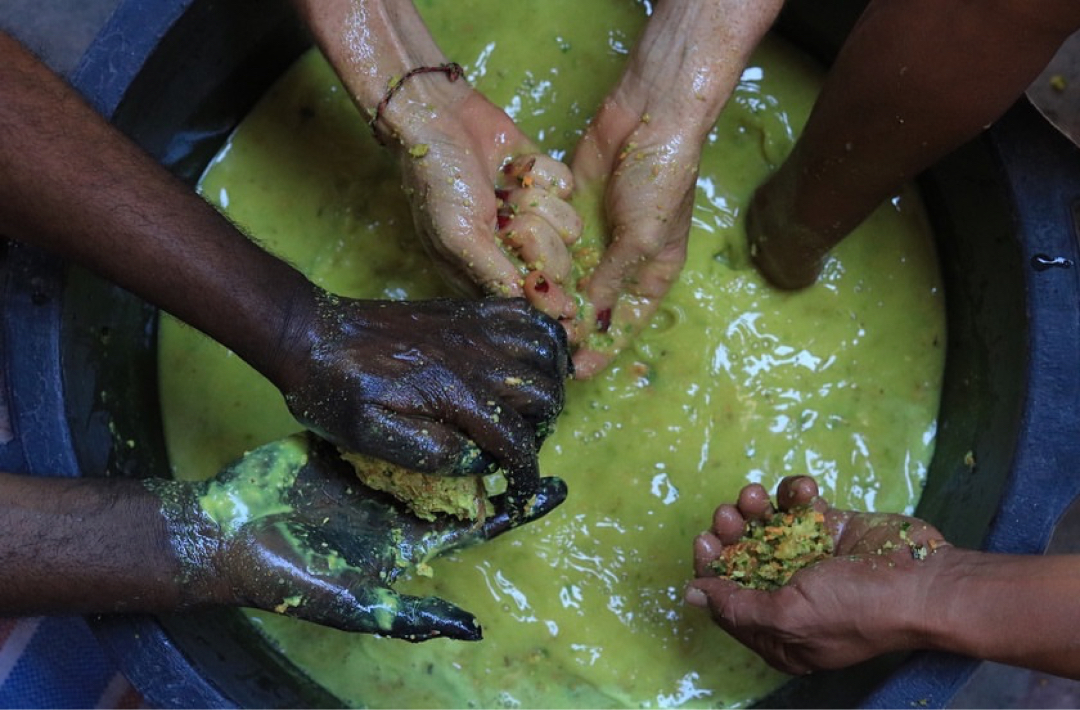
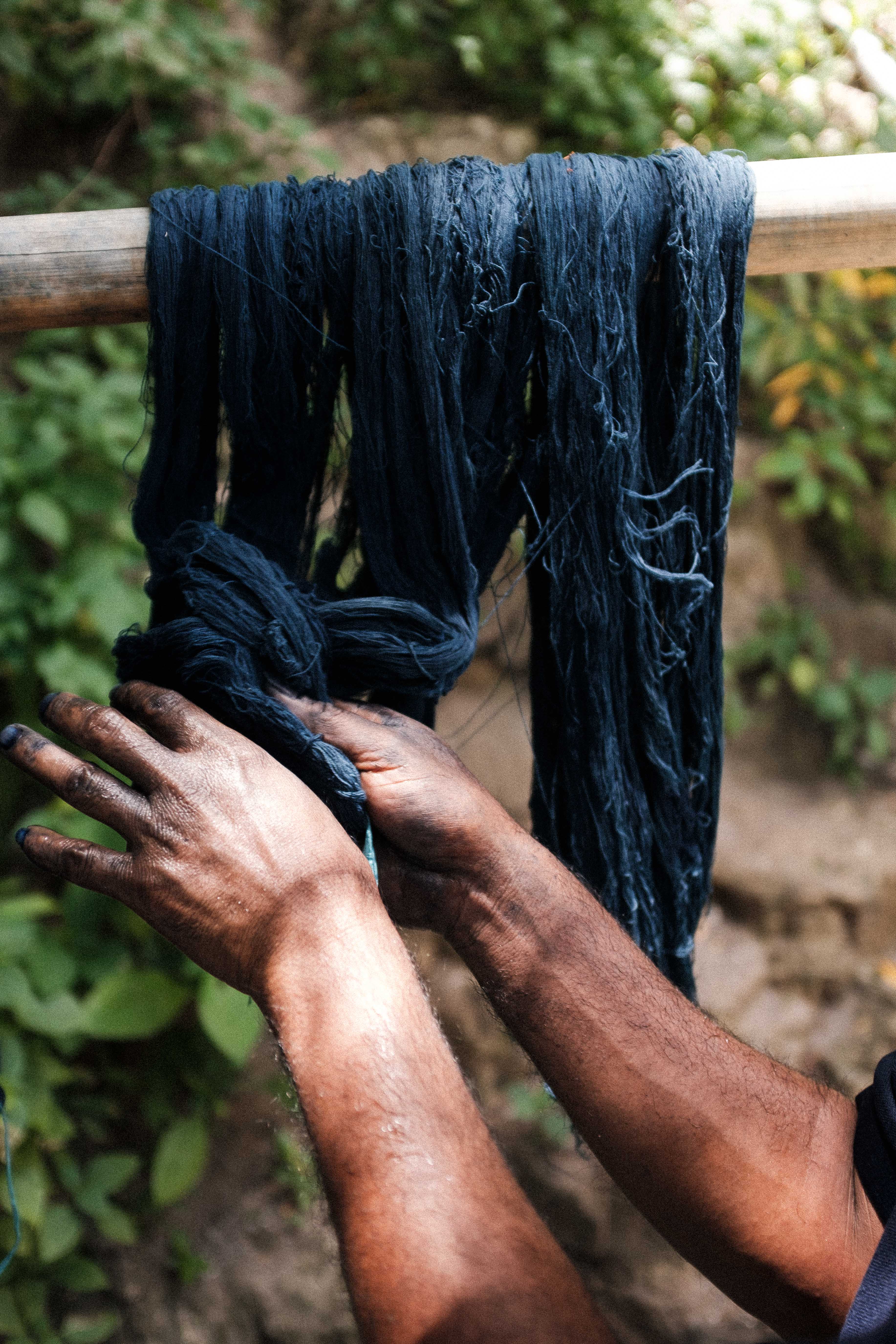
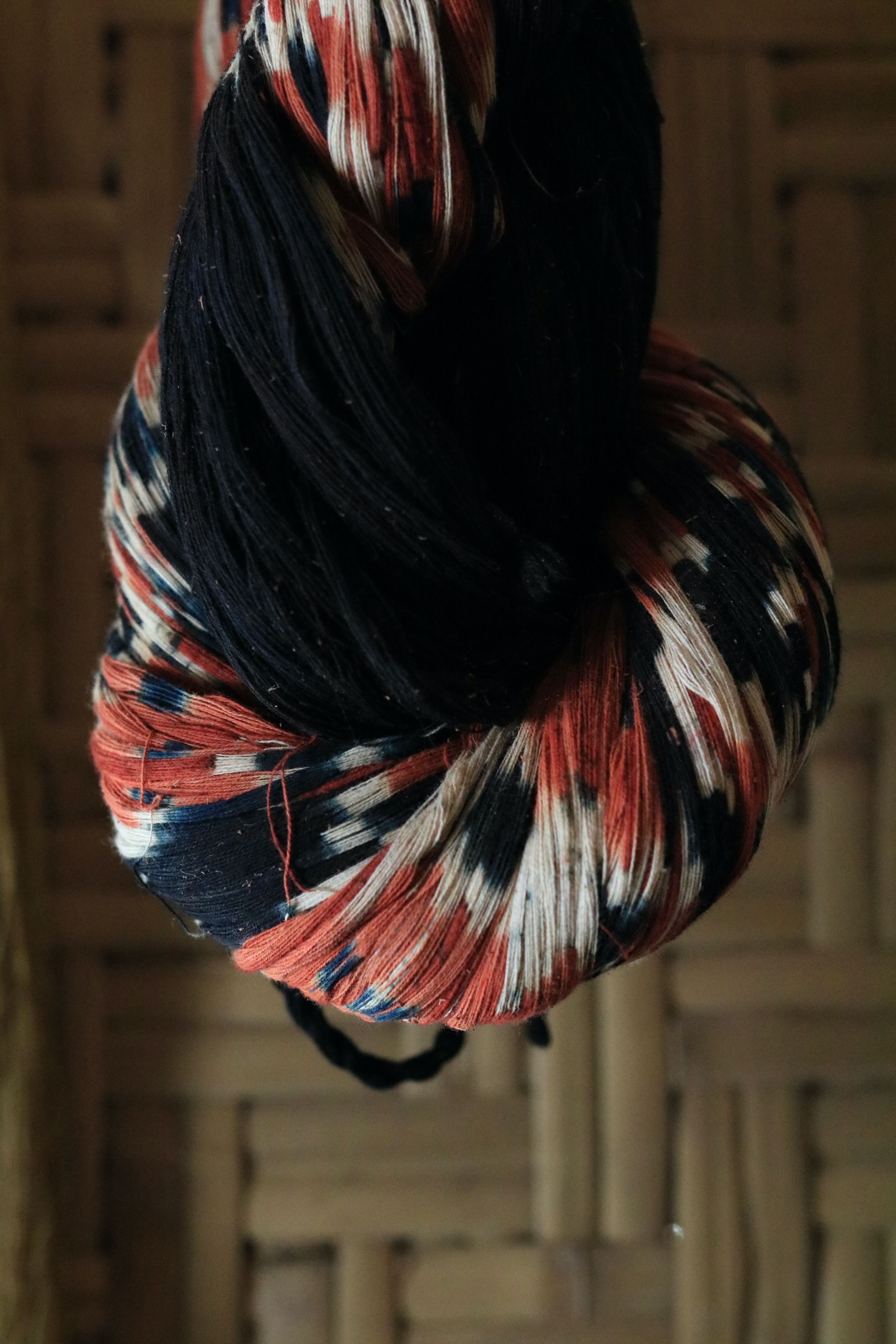
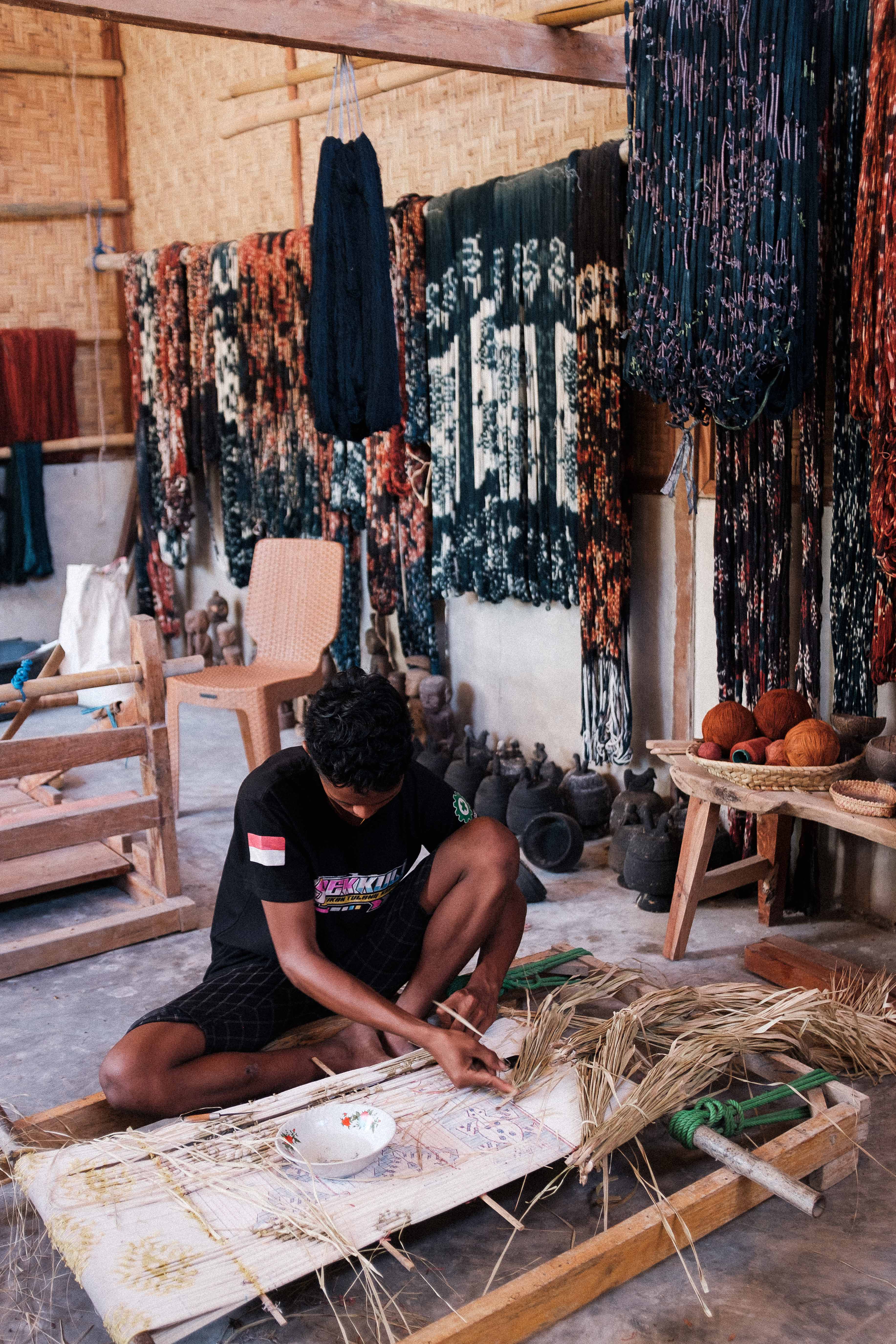
UNDERSTANDING THE PROCESS BEHIND IKAT TENUN
Understanding the UNESCO heritage craft Indonesian Ikat process.
Every step is so complex we thought we would break it down in digestible simple steps!
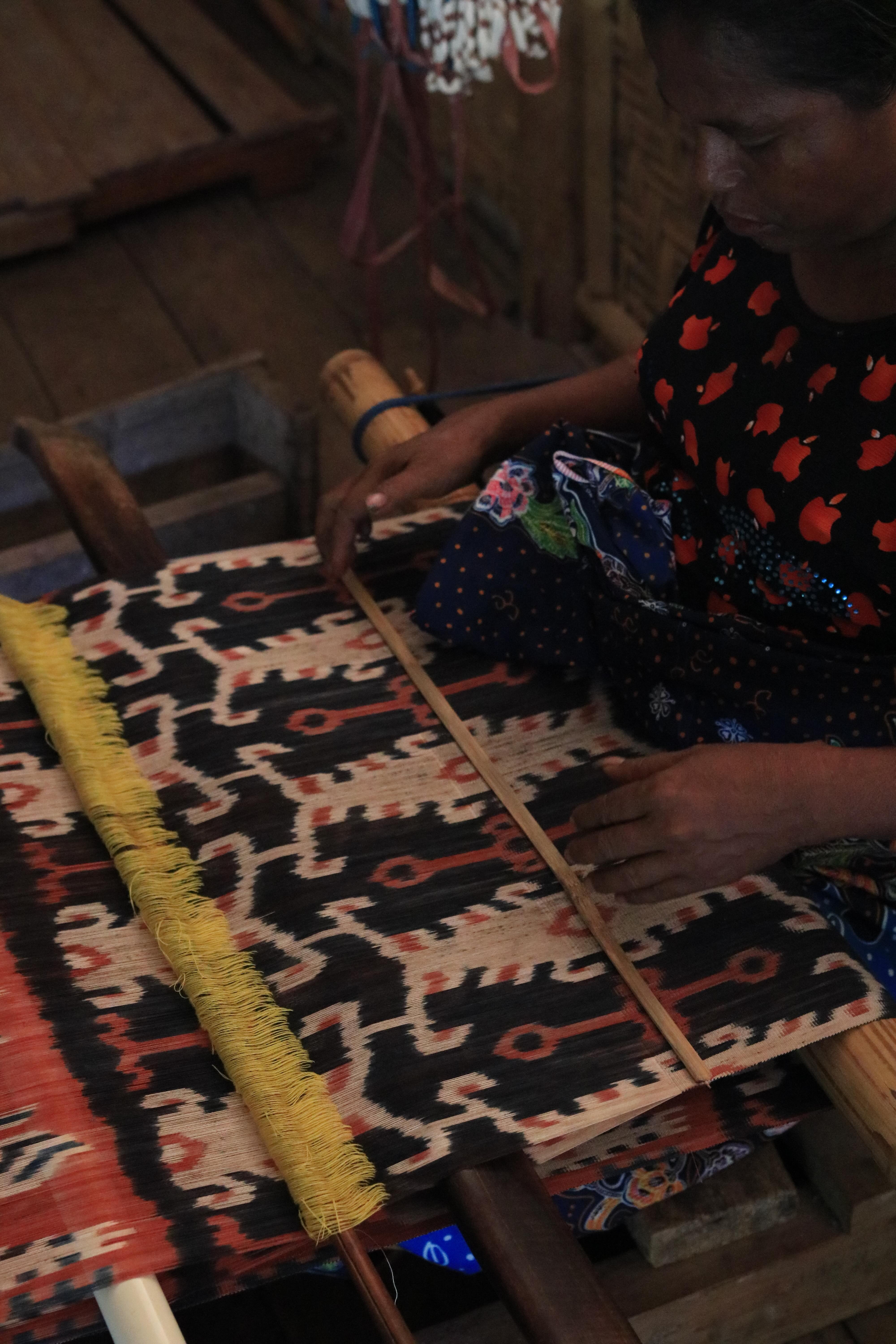
The backstrap hand looming process:
The backstrap loom weaving step in creating ikat tenun takes months & months, depending on several factors:
1. Size of the Textile: Larger pieces such as traditional wraps or sarongs can take significantly longer (e.g., 1–3 months) compared to smaller items like scarves.
2. Complexity of the Design: Intricate patterns require more time because each row must align with the pre-dyed and knotted ikat patterns.
The weaver needs to work carefully to maintain precision.
3. Skill of the Weaver: Experienced weavers may work faster, but the manual nature of the process still requires patience and precision.
4. Time Available: Many artisans weave in between daily community activities, which can extend the timeline compared to full-time weaving
.Estimated Timeframes excluding the preparation which can take up to 6 months.
• Small, simple designs: 2–4 weeks
• Medium, moderately intricate designs: 1–2 months
• Large, highly intricate pieces: 3–6 months
During this step, the #artisan threads the warp (lengthwise threads) onto the backstrap loom, which is tensioned by the weaver’s body. Using a shuttle, the weft threads (crosswise threads) are woven through, row by row, to gradually reveal the design. Aligning the dyed ikat patterns with the weaving is a slow and meticulous process that demands focus, as any misalignment can distort the design.
Symbolically the process of ikat is said to represent unity and connection , as threads are bound together to create a cohesive and meaningful pattern. It reflects the deep cultural and spiritual ties within the local communities.
Trust the process- THE ART OF ANCESTORS